|
|
Receiving a transplant means a new lease of life. Most
people who receive a transplant can return to normal
work, social and leisure activities within a few months.
|
 |
|
Living with a transplant, however, does mean that you
need to take some sensible steps to protect your new
organ and to stay healthy.
|
|
|
|
|
|
|

|
|
Protecting your transplant
|
|
|
|
|
|
The body regards a transplanted organ as in invader,
in the same way as it sees a germ. It fights the new
organ in the same way it would fight infection - this
is called organ rejection. Many transplant patients
experience some organ rejection in the first few weeks
after transplantation. However, rejection can also happen
months or even years after transplantation.
|
|
|
|
This is why everyone who receives a transplant must
continue to take anti-rejection drugs for the rest of
their lives. One of the most common reasons for a transplanted
organ to fail is that the person stops taking their
anti-rejection medication as directed by their doctor.
|
|
|
To protect your transplant from being rejected:
|
|
|
|
Always follow the instructions your doctor gives
you for taking your medication
|
|
|
|
|
Never change your dose or stop your medication
yourself
|
|
|
|
|
Try to take your medication at the same time
every day
|
|
|
|
|
If you forget to take your medication, take it
as soon as you remember unless it is almost time
for your next dose, in which case continue as
normal
|
|
|
|
|
Make sure that you always have enough medication
- for example to last over weekends or public
holidays
|
|
|
|
|
If you purchase any medication on your own, check
with the pharmacist that it will not affect your
anti-rejection drugs
|
|
|
|
|
Avoid herbal remedies such as St John's Wort,
which is known to affect some anti-rejection medications
|
|
|
|
|
Tell any doctor you may consult that you have
a transplant and what medication you are taking
|
|
|
|
It is also important to tell your doctor if you experience
any new symptoms, or if you develop an infection.
|
|
|
|
|
|
back
to top
|
|
|
|
|
Healthy living
|
|
|
|
|
|
Receiving a transplant can give you the opportunity
to return to a normal lifestyle. You may have been unwell
for a long time, and readjusting to life after transplantation
includes developing a healthy approach to your lifestyle.
This is particularly important because long-term illness
prior to transplantation and anti-rejection medication
increase the risk of cardiac disease.
|
|
|
|
What you eat
|
|
|
|
You are likely to find your appetite increases after
your transplant, particularly if you have been unwell
for some time beforehand. Eating well is part of recovery
after transplantation, but unfortunately some anti-rejection
drugs can increase appetite dramatically and you may
find you put on too much weight.
|
|
|
|
Sensible eating, following a diet that is low in fat
and sugar but high in fibre, is recommended. If you
are unsure about what to eat, ask your doctor. Weigh
yourself at least once a week to check that you are
not becoming overweight.
|
|
|
|
It is also advisable to avoid eating a lot of salt,
since this may increase your blood pressure. Try to
use salt sparingly when you cook and do not add salt
to food on the table. Tinned food and snacks such as
crisps contain a lot of salt.
|
|
|
|
Lastly, some people who have had a kidney transplant
may have difficulty regulating the amount of potassium
in their body. Avoid eating large amounts of food which
contain high levels of potassium such as bananas or
spinach. Follow the advice given by your doctor.
|
|
|
|
Exercising
|
|
|
|
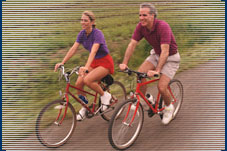
Building up your fitness is an important part of rehabilitation
after transplantation. Follow the advice of your transplant
centre on what level of exercise you should do, and
what to start. Establish a regular exercise routine,
and aim to build up slowly - remember that your body
has been weakened by illness. Walking and cycling, for
example, are good for general fitness. As your strength
builds up, you can begin more strenuous exercise such
as jogging.
|
|
|
|
Stop your exercise programme and consult your doctor
if you experience pain in your chest, unusual shortness
of breath, dizziness during exercise or if your heart
rate speeds up unexpectedly or becomes irregular when
you exercise.
|
|
|
|
Smoking
|
|
|
|
If you smoke, it is especially important that you stop
after your transplant since this increases the risk
that you will develop heart disease. Your transplant
centre or doctor will be able to give you advice on
trying to stop smoking
|
|
|
|
|
|
back
to top
|
|
|
|
|
Avoiding infection
|
|
|
|
|
|
Anyone who has received a transplant is more vulnerable
to infection because the anti-rejection medication which
protects your transplant also weakens your ability to
fight bacterial and viral infections.
|
|
|
|
Some basic hygiene steps can help reduce the risk of
developing an infection:
|
|
|
|
Pets
|
|
|
|
|
Vaccinate pet cats and dogs
|
|
|
|
|
Avoid touching caged birds
|
|
|
|
|
If your pet licks your face or hands wash the
area immediately with soap and water
|
|
|
|
|
Keep your pet's bowls and feeding material away
from your own food or utensils
|
|
|
|
|
Use rubber gloves if you are cleaning cages or
handling litter trays
|
|
|
|
|
Dental treatment
|
|
|
|
|
You should be given antibiotic drugs before any
invasive dental work eg tooth extraction
|
|
|
|
|
|
|
back
to top
|
|
|
|
|
Travel & vaccination
|
|
|
|
|
|
Once your doctor is satisfied with your medical condition
after the transplant, there is no reason why you cannot
travel to other countries. However, there are some points
you need to remember to help avoid endangering your
transplant:
|
|
|
|
|
Always check your travel plans with your doctor
in advance if you have any doubts, and follow
your doctor's advice
|
|
|
|
|
Avoid countries where there is a risk of contaminated
water or food, or where the sanitation is poor.
The anti-rejection drugs you take make you more
likely to develop infections.
|
|
|
|
|
In countries where you have any concerns over
the level of hygiene, avoid tap water, ice cubes,
shellfish, unpeeled fruit, salads and rare meat.
|
|
|
|
|
Make sure you take enough of your medication
with you for your entire holiday. It may be difficult
to obtain the right medication in some countries.
|
|
|
|
|
Pack a supply of your medication in your hand
luggage in case your main luggage is lost.
|
|
|
|
|
Vaccination
|
|
|
|
When you have had a transplant it is particularly important
to be vaccinated before travelling to certain countries.
However, 'live attenuated' vaccines should be avoided.
Your transplant unit can supply a list of vaccinations
that are safe to use.
|
|
|
|
Your doctor may ask you to be vaccinated against influenza
every year. You may also be vaccinated against an infection
called pneumococcus.
|
|
|
|
Malaria is a serious condition in anyone who is taking
anti-rejection drugs, and it is essential to take anti-malaria
medication if you are travelling to a country where
there is any danger of catching the disease. However,
you should contact your transplant unit to check which
anti-malarial drugs you can take safely.
|
|
|
|
|
|
back
to top
|
|
|
|
|
Sun protection
|
|
|
|
|
|
The immunosuppressive drugs that protect your transplant
from rejection also make you more vulnerable to the
risk of developing skin cancer.
|
|
|
|
One important way to help avoid this is to take sensible
precautions against too much exposure to the sun:
|
|
|
|
|
Use a high-factor sunscreen, especially on your
face, neck, ears and hands when you are out in
the sun
|
|
|
|
|
Reapply sunscreen regularly during the day
|
|
|
|
|
Avoid the sun during the hottest part of the
day (10.00 to 15.00 hours)
|
|
|
|
|
If you are in the sun for an extended period
wear long sleeves and trousers, and a hat
|
|
|
|
|
If you notice any changes to your skin, such as unusual
growths or a discolouration, or if an existing mole
starts to look different, ask your doctor to check it
for you.
|
|
|
|
|
|
back
to top
|
|
|
|
|
Contraception & pregnancy after a transplant
|
|
|
|
|
|
Oral contraceptives
|
|
|
|
Some anti-rejection drugs can affect the potency of
certain oral contraceptives. Make sure your doctor knows
what anti-rejection drugs you are taking if you are
using oral contraception. Low-oestrogen content combined
pills are usually the most appropriate option for oral
contraception following a transplant.
|
|
|
|
Pregnancy
|
|
|
|
There have been many hundreds of successful pregnancies
in women who have had a transplant, and many men have
fathered children after transplantation.
|
|
|
|
Most women find that their menstrual cycle returns
to normal a few months after they have a transplant.
It is advisable to wait for one year after the transplant
before becoming pregnant, and sensible to talk to your
doctor before stopping contraception to ensure that
any adjustments can be made to your anti-rejection medication
if necessary and to plan regular health checks.
|
|
|
|
|
|
|
back
to top
|
|