|
Medications
|
 |
|
Everyone who receives a transplant requires life-long
anti-rejection medication to protect their transplanted
organ from being attacked and rejected by the body's
immune system. Many hospitals use three anti-rejection
drugs together, which can give maximum protection while
minimising any side effects.
|
|
|
|
Over twenty years ago, Novartis (then called Sandoz)
produced an anti-rejection drug called cyclosporin that
dramatically improved the success of transplantation.
Before cyclosporin became available, only 60% of kidney
transplants were still working after a year. Today,
this has increased to 90%. Cyclosporin also allowed
new types of transplantation to be carried out for the
first time, such as combined heart and lung transplants.
|
|
|
|
Today, Novartis produces two anti-rejection medications
that are used widely throughout the world to help protect
transplants:
|
|
|

|
Neoral®
(cyclosporin). This is the most commonly used
anti-rejection medication. It is used for life-long
treatment (called 'maintenance' treatment) after
a transplant.
|
|
|
Simulect®
This medication is given just twice, for extra
protection at the time of transplantation when
the new organ is most vulnerable to rejection.
|
|
|
|
|
Novartis has the largest transplantation research programme
in the world. The company is developing several innovative
new immunosuppressive
medications with the goal of achieving
effective transplant protection with fewer side effects.
|
|
|
|
|
|
Neoral® Simulect New
immunosuppressive medications Supporting
the transplant community
|
|
|
|
|
|
About Neoral®
|
|
|
|
Neoral® is a powerful anti-rejection
medication that has been used in more than 100,000 people
with transplants worldwide. It contains the drug cyclosporin
in a special formulation which helps your body absorb
the drug effectively. Cyclosporin has been used in transplantation
for more than 20 years, and there is very extensive
information about its potency and safety record.
|
|
|
|
Neoral® has been shown to prevent rejection
of transplanted kidney, livers, hearts, lungs and combined
kidney-pancreas transplants. It is used in adults and
children.
|
|
|
|
It is important that your body receives the right
amount of cyclosporin, as determined by your doctor.
Neoral® has been formulated to
assist the absorption of cyclosporin using a unique
microemulsion design. Do not use any other type
of cyclosporin without the knowledge and agreement
of your doctor, since this might mean that you
absorb less cyclosporin and risk your transplant
being rejected.
|
|
 |
|
|
|
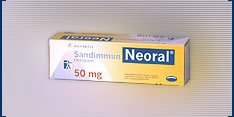
Neoral® is used in over 100,000 with
transplants worldwide.
|
|
|
|
Taking your Neoral®
|
|
|
|
Follow whatever directions your doctor gives you for
taking Neoral®. It is usually taken twice
a day, along with one or two other anti-rejection drugs.
It is important to take Neoral® exactly
as directed to give the required level of protection
for your transplant.
|
|
|
|
Avoid eating grapefruit or drinking grapefruit juice
for before or after you take Neoral®,
since this can affect the way your body absorbs the
drug.
|
|
|
|
Checking your Neoral® level
|
|
|
|
Your dose of Neoral® will be adjusted
by your doctor to make sure that you are receiving the
right level of anti-rejection protection for you. This
dose will be a balance between preventing your immune
system from rejecting the organ and the need to avoid
side effects.
|
|
|
|
To check that your dose is correct, you will have regular
blood samples taken to measure how much Neoral®
is in your body. For some patients, this blood sample
will be taken just before the dose of Neoral®
is taken (called 'C0 monitoring' or 'trough
monitoring'). Other patients will have their blood sample
taken 2 hours after they take their Neoral®.
This is a new method of monitoring which gives the doctor
more information about how much Neoral®
your body is absorbing, and is called 'C2
monitoring'.
|
|
|
|
Side effects
|
|
|
|
All long-term anti-rejection agents can cause side
effects, including Neoral®. However,
you are very unlikely to experience all the possible
side effects of Neoral®. Also, as your
dose of Neoral® is reduced over time
you will probably experience fewer side effects and
they generally become milder.
|
|
|
|
The side effects of Neoral® can be divided
into short-term and long-term effects. The lists below
includes the most common side effects that are experienced.
|
|
|
|
Short-term side effects
|
|
|
|
These tend to occur early in treatment when the dose
of Neoral® is kept relatively high to
give maximum protection against rejection during the
most vulnerable few weeks after transplantation. For
most people, these side effects become milder as the
dose is reduced.
|
|
|
|
|
Tremor, headache or a numbness in the fingers
and toes
|
|
|
|
|
Excess hair growth (hypertrichosis). This side
effect is particularly common in Asian people.
It usually subsides once the Neoral®
dose is reduced, but otherwise depilatory creams
can be used, or possibly electrolysis for permanent
hair removal
|
|
|
|
|
Gum overgrowth (gingival hyperplasia), causing
sore gums. Good dental hygiene is important, including
daily brushing and flossing and use of an antiseptic
mouthwash. Regular dental check-ups every 6 months
are also advisable.
|
|
|
|
|
Kidney function can be impaired by Neoral®,
in common with other drugs of this type. Your
doctor will monitor your kidney function carefully.
If a change is detected, a reduction in Neoral®
dose usually overcomes the problem.
|
|
|
|
|
High blood pressure. Your blood pressure will
be monitored and if necessary you will be given
medication to bring it back down to normal.
|
|
|
|
|
Long-term side effects
|
|
|
|
All patients who receive immunosuppressive therapy,
for any reason, are more vulnerable to infection or
to certain types of cancer (usually small skin cancers)
because their immune system is weakened. This also applies
to transplant patients receiving Neoral®
or other anti-rejection immunosuppressive drugs.
|
|
|
|
Infection. You can reduce the risk of developing
infection by following some basic hygiene
steps. It is also important to consider the risk of
infection when you travel to other countries and obtain
appropriate vaccination.
|
|
|
|
If you develop signs of an infection, such as a fever,
visit your doctor immediately.
|
|
|
|
Risk of certain cancers. Anyone taking anti-rejection
medication should avoid over-exposure to the sun
to reduce the chance of developing skin cancer. Women
who have had transplants should also make sure that
they have annual cervical smears and examine their breasts
regularly. Men should carry out regular testicular examination.
Ask your doctor for more information.
|
|
|
|
|
|
back
to top
|
|
|
|
|
|
Neoral® Simulect New
immunosuppressive medications Supporting
the transplant community
|
|
|
|
|
|
About Simulect®
|
|
|
|
Organ rejection is most common in the first
few weeks following the transplant operation.
Simulect® is given only around
the time of transplantation to provide extra
protection against rejection during this
period.
|
|
|
Simulect® contains an active
ingredient called basiliximab. It is a 'monoclonal
antibody' which helps prevent the immune
system reacting to the new organ. Adding
Simulect® has been shown
to reduce further the risk of the transplant
being rejected.
|
|
|
Simulect® is given to people
having a kidney transplant, usually together
with Neoral®
and other anti-rejection medication. It
can be used in adults and children.
|
|
|
 |
|
|
|
|
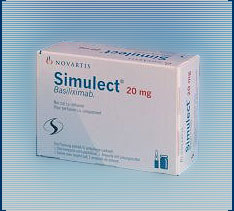
Simulect® is used to protect transplants
during the most vulnerable few weeks after transplantation.
|
|
|
How Simulect® is given
|
|
|
|
Simulect® is injected twice. The first
injection is on the day of the transplant and the second
is given four days after the operation. You do not need
to take Simulect® at any other time.
|
|
|
|
Side effects of Simulect®
|
|
|
|
Simulect® appears to have
almost no side effects. Many studies have compared the
side effects seen in people taking Simulect®
to patients receiving a placebo injection containing
no medication, and all of these studies showed that
Simulect® did not cause any extra side
effects at all.
|
|
|
|
|
|
back
to top
|
|
|
|
|
|
Neoral® Simulect New
immunosuppressive medications Supporting
the transplant community
|
|
|
|
|
|
Novartis is actively developing new immunosuppressive
medications designed to protect transplanted organs
effectively against rejection and improve long-term
transplant function while reducing the side effects
experienced by transplant recipients.
|
|
|
|
Certican™ has shown promise in preventing
chronic allograft nephropathy (also known as chronic
allograft failure or chronic rejection). This is a long-term
problem that can cause transplanted organs to deteriorate
and fail a long time after transplantation.
|
|
|
|
Myfortic™ is a new medication which acts
in a similar way to an existing medication called mycophenolate
mofetil. Myfortic™ has a special coating that may
help avoid some of the side effects of mycophenolate
mofetil such as nausea and vomiting.
|
|
|
|
FTY720 helps to prevent the immune system attacking
the new organ. It does not appear to affect how the
immune system deals with infections caused by viruses,
which would be an advantage for people who receive transplants.
|
|
|
|
These medications are all currently being researched
to confirm their effectiveness and safety.
|
|
|
|
|
|
back
to top
|
|
|
|
|
|
Neoral® Simulect New
immunosuppressive medications Supporting
the transplant community
|
|
|
|
|
|
Worldwide research partnership
|
|
|
|
Novartis works in partnership with transplant centres
and research institutes throughout the world to support
pioneering research into exciting new treatments for
transplant patients. This includes ground-breaking investigations
into the use of gene therapy to help overcome the body's
immune response to transplantation, and innovative techniques
to try to induce 'tolerance' to a transplanted organ.
|
|
|
|
In addition, Novartis' own team of over 250 transplant
scientists investigates new ways to prevent rejection
of transplanted organs that keep side effects to a minimum.
This research programme has already developed Neoral®
and Simulect®,
two anti-rejection medications that are used very widely
to give effective protection against rejection.
|
|
|
|
Helping overcome the organ shortage
|
|
|
|
A major issue in transplantation is the shortage of
donor organs, particularly for kidney and heart transplantation.
Many people wait many years for a suitable donor, or
in some cases never receive one.
|
|
|
|
Novartis is supporting a number of key initiatives
to help address this problem:
|
|
|
|
Living donation. Novartis sponsors educational
programmes to raise awareness of the benefits of living
donation and to transfer experience from centres who
carry out a large number of living donor transplants
|
|
|
|
Donor Action. This is a collaboration between
Eurotransplant and the National Transplant Organisation
in Spain (ONT). Donor
Action is an analytical and educational package
about organ donation which aims to improve the number
of potential donors identified within hospitals
|
|
|
Working with the transplant community
|
|
|
Novartis is also a major contributor to
many local, national and international support
groups and events for transplant recipients,
including the World Transplant Games.
|
|
|
 |
|
|
|
|
|
|
back
to top
|
|
|